From Layout to Complete: The Full Aluminum Casting Process Demystified
In the world of manufacturing, the process of aluminum casting stands as a critical approach that has actually sustained markets for years. Each action in this elaborate process, from the first layout stage to the last finishing touches, plays an important duty in shaping the result of the item. What really lies below the surface of this process stays a secret to numerous. By unwinding the intricacies and clarifying the subtleties associated with each phase, a much deeper understanding of the art and science behind aluminum spreading emerges. about aluminum casting. Stay tuned as we explore the full light weight aluminum spreading process, uncovering the ins and outs that change basic materials into refined products.
Creating the Casting Mold And Mildew
When starting the aluminum spreading procedure, careful interest to designing the casting mold is vital for making sure the end product's honesty and quality. The casting mold and mildew acts as the structure for the whole casting procedure, dictating the form, measurements, and surface area coating of the ultimate light weight aluminum component.
To create an effective spreading mold, engineers should consider numerous elements such as the intricacy of the part, the sort of light weight aluminum alloy being used, and the wanted residential or commercial properties of the end product. about aluminum casting. Computer-aided design (CAD) software program is typically used to produce detailed schematics of the mold and mildew, enabling specific personalization and optimization
In addition, the style of the spreading mold and mildew directly impacts the performance and cost-effectiveness of the casting process. A properly designed mold decreases material waste, minimizes the demand for comprehensive post-casting machining, and improves total production speed.
Melting and Putting Light Weight Aluminum
With the style of the spreading mold completed, the next vital step in the aluminum casting procedure is the melting and pouring of the aluminum alloy. As soon as the light weight aluminum is molten, it is critical to keep the temperature level within a details array to make certain the quality of the castings.
The liquified light weight aluminum is carefully moved from the heating system to the spreading mold. Correct putting techniques contribute significantly to the total high quality of the final light weight aluminum spreading.
Cooling Down and solidifying Refine
Upon completion of the pouring procedure, the molten light weight aluminum shifts into the strengthening and cooling stage, an essential phase in the light weight aluminum casting procedure that directly affects the final item's honesty and qualities. As the light weight aluminum begins to cool down, its molecules prepare themselves right into a strong type, progressively handling the form of the mold and mildew. The rate at which the aluminum cools down is essential, as it affects the material's microstructure and mechanical residential properties. Rapid cooling can cause a finer grain structure, improving the product's stamina, while slower cooling might lead to larger grain dimensions, impacting the end product's ductility.
Throughout this phase, it is necessary to control the cooling process very carefully to stay clear of problems such as porosity, contraction, or internal stress and anxieties. Different cooling methods, such as air cooling, water quenching, or regulated cooling chambers, can be employed based upon the details requirements of the casting (about aluminum casting). By controling the solidification and keeping an eye on and cooling down process, producers can guarantee the manufacturing of premium light weight aluminum castings with the wanted metallurgical and mechanical residential properties
Removing the Final Spreading
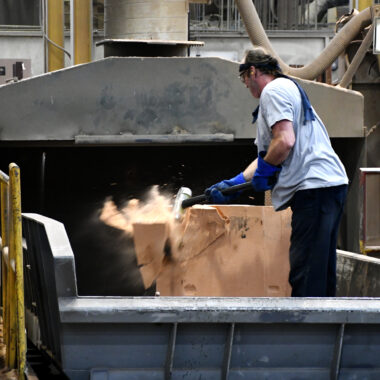
Once the aluminum casting has actually adequately solidified and cooled down in the mold and mildew, the next action in the process involves very carefully eliminating the last spreading. This action is essential to guarantee that the light weight aluminum component is effectively drawn out without any damage or problems.
To get rid of the spreading, the mold is opened up, and the spreading is removed using various approaches depending upon the intricacy of the mold and mildew and the part design. For simpler forms, the spreading can typically be quickly gotten rid of by hand or with basic devices. For even more detailed designs, extra tools such as ejector pins, air blasts, or hydraulic systems may be required to assist in the elimination process without causing any type of harm to the spreading.
After the casting is effectively removed from the mold and mildew, any type of excess product such as gateways, joggers, or risers that were used throughout the casting process are trimmed off. This action assists in achieving the last preferred shape of the aluminum part prior to it undertakes any additional finishing processes.
Finishing and High Quality Assessment
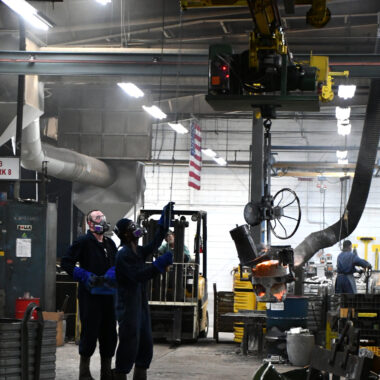
The final phase in the light weight aluminum spreading process includes thorough completing methods and rigorous top quality examination protocols to guarantee the stability and accuracy of the cast aluminum parts. Ending up methods such as grinding, fining sand, content and shot blasting are made use of to remove any type of excess material, smooth harsh surface areas, and boost the aesthetic allure of visit their website the end product. These processes not just boost the appearance yet also guarantee that the components satisfy the defined dimensional tolerances and surface coating demands.
Verdict
Finally, the light weight aluminum casting procedure entails designing the mold and mildew, melting and pouring light weight aluminum, strengthening and cooling down the spreading, removing the end product, and completed with a quality inspection. Each action is essential in guaranteeing the last product satisfies the wanted specs. By understanding the whole process, suppliers can generate high-quality aluminum spreadings efficiently and effectively.
Keep tuned as we explore the full aluminum spreading procedure, discovering the details that transform raw products into refined items.
With the design of the spreading mold finalized, the next critical step in the light weight aluminum spreading procedure is the melting and pouring of the light weight aluminum alloy.Upon conclusion of the pouring process, the liquified light weight aluminum transitions right into the cooling and solidifying stage, an essential stage in the aluminum spreading procedure that straight impacts the last product's check my site stability and features.The last stage in the aluminum spreading procedure involves precise completing strategies and rigorous quality evaluation procedures to make certain the integrity and precision of the cast aluminum components.In conclusion, the light weight aluminum spreading procedure entails designing the mold, melting and pouring aluminum, cooling down the casting and strengthening, getting rid of the last item, and ending up with a top quality inspection.
Comments on “Dive Deep: Insights About Aluminum Casting Processes”